Vitamin D is one of the most important nutrients for maintaining strong bones, healthy muscles, immunity, and overall well-being. Despite living in a sunny country like India, millions of people suffer from vitamin D deficiency without realizing it. Many symptoms develop slowly and are often mistaken for stress, aging, or lack of sleep.
Understanding the early vitamin D deficiency symptoms can help you take action before serious health complications occur.
At Diagnomitra Healthcare, we make preventive healthcare easy by connecting patients with trusted NABL-accredited laboratories across India. Diagnomitra is a large healthcare platform where all major NABL labs are available under one roof, making quality diagnostic testing accessible and convenient.
What Is Vitamin D?
Vitamin D is a fat-soluble vitamin that helps the body absorb calcium and phosphorus. It plays a critical role in:
-
Bone health
-
Muscle strength
-
Immune function
-
Brain health
-
Heart health
-
Hormonal balance
A deficiency of vitamin D can affect multiple systems in the body and lead to long-term health problems.
Why Is Vitamin D Important?
Many people ask, "Why is vitamin D important?"
The answer is simple. Without sufficient vitamin D, your body cannot effectively absorb calcium, resulting in weak bones, reduced immunity, fatigue and muscle problems.
Benefits of maintaining healthy vitamin D levels include:
-
Strong bones and teeth
-
Better immunity
-
Improved muscle function
-
Reduced risk of fractures
-
Enhanced mood and mental health
-
Better overall energy levels
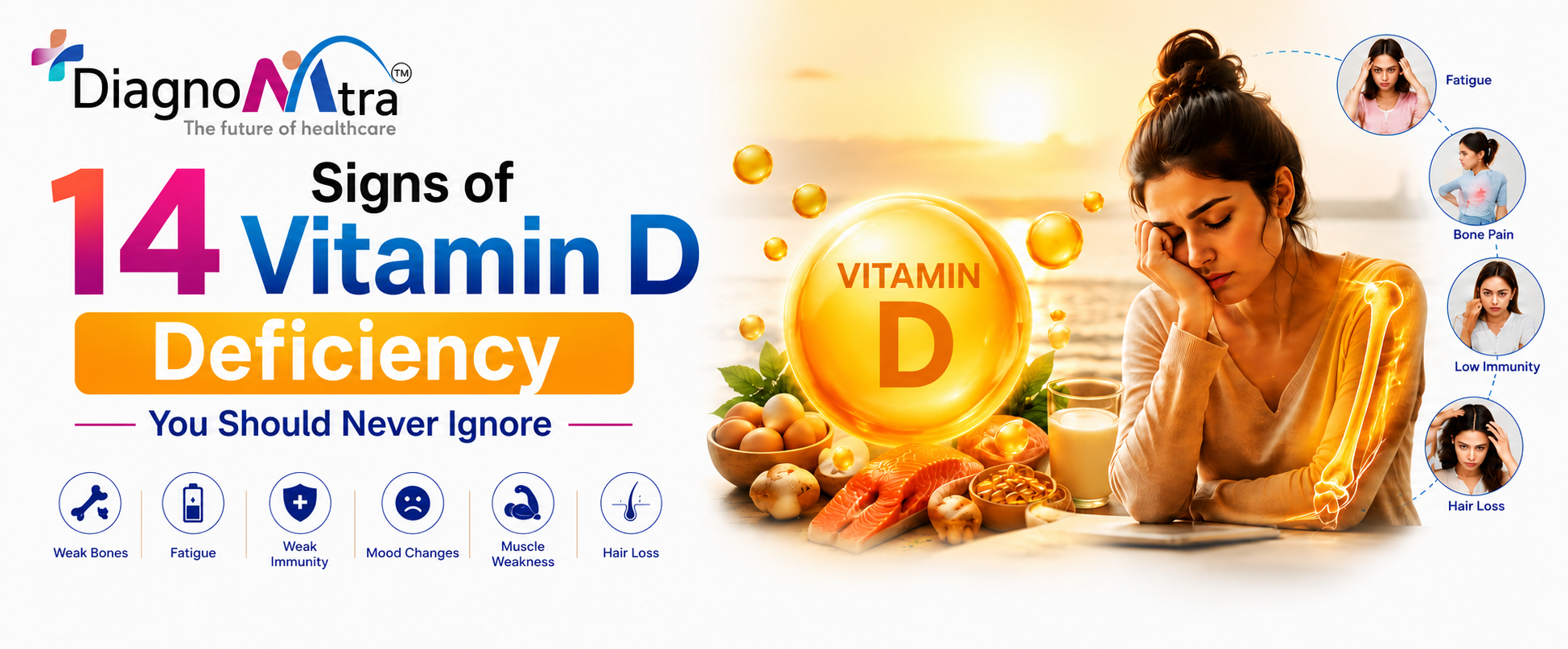
14 Signs of Vitamin D Deficiency
1. Constant Fatigue and Low Energy
Feeling tired all the time despite getting enough sleep may be one of the earliest vitamin D deficiency symptoms. Low vitamin D levels can significantly impact your energy production and daily performance.
2. Frequent Illness and Infections
Vitamin D supports the immune system. If you frequently catch colds, flu, or infections, a deficiency of vitamin D may be contributing to weakened immunity.
3. Bone Pain
Persistent pain in bones, especially in the back, hips, legs or ribs, is a common warning sign of vitamin D deficiency.
4. Muscle Weakness
Weak muscles, difficulty climbing stairs, and reduced physical strength are often linked to low vitamin D levels.
5. Back Pain
Several studies have found an association between chronic lower back pain and vitamin D deficiency.
6. Hair Loss
While hair loss can occur for many reasons. Severe vitamin D deficiency may contribute to excessive hair thinning and hair fall.
8. Mood Changes and Depression
Vitamin D receptors are present in the brain. Low levels have been associated with mood disorders, anxiety and depression.
9. Poor Sleep Quality
People with inadequate vitamin D often report insomnia, disturbed sleep or poor sleep quality.
10. Joint Pain
Unexplained joint discomfort and stiffness may be another sign of vitamin D deficiency symptoms.
11. Increased Sweating
Excessive sweating, especially around the forehead, has historically been recognized as a symptom of low vitamin D.
12. Difficulty Walking
Severe deficiency of vitamin D can impact muscle coordination and balance - making walking more difficult.
13. Bone Fractures
Weak bones caused by prolonged vitamin D deficiency increase the risk of fractures and osteoporosis.
14. Reduced Physical Performance
Athletes and active individuals may notice reduced endurance, slower recovery and poor performance due to low vitamin D levels.
What Causes Vitamin D Deficiency?
Several factors can contribute to vitamin D deficiency, including:
-
Limited sun exposure
-
Indoor lifestyle
-
Darker skin pigmentation
-
Obesity
-
Aging
-
Kidney disorders
-
Liver diseases
-
Poor dietary intake
-
Malabsorption conditions
When Should You Get a Vitamin D Test?
You should consider a vitamin D test if you experience:
-
Chronic fatigue
-
Bone pain
-
Muscle weakness
-
Frequent infections
-
Hair loss
-
Mood changes
-
Poor sleep quality
Regular screening is especially important for elderly individuals, office workers, pregnant women and people with chronic illnesses.
Which Test Detects Vitamin D Deficiency?
The most reliable vitamin D test is:
Vitamin D (25-Hydroxy Vitamin D) Blood Test
This test measures the amount of vitamin D in your bloodstream and helps determine whether your levels are:
-
Deficient
-
Insufficient
-
Sufficient
-
Excessive
How Is Vitamin D Deficiency Treated?
Treatment depends on the severity of the deficiency and may include:
-
Vitamin D supplements
-
Increased sunlight exposure
-
Dietary changes
-
Regular monitoring through a vitamin D test
Foods rich in vitamin D include:
-
Fatty fish
-
Egg yolks
-
Fortified milk
-
Cheese
-
Mushrooms
Who Is Most at Risk?
High-risk groups include:
-
Elderly adults
-
Pregnant women
-
People with obesity
-
Individuals with limited sun exposure
-
Corporate employees
-
Patients with digestive disorders
Must You Treat Vitamin D Deficiency?
Yes. Untreated vitamin D deficiency can lead to:
-
Osteoporosis
-
Bone fractures
-
Chronic pain
-
Reduced immunity
-
Muscle weakness
-
Poor quality of life
Early detection through a vitamin D test can help prevent these complications.
Why Choose Diagnomitra Healthcare for Vitamin D Testing?
Diagnomitra Healthcare is a trusted healthcare platform that partners with leading NABL-accredited laboratories across India. Through Diagnomitra, patients can access reliable diagnostic services, home sample collection, affordable pricing, and accurate reports from certified labs.
Whether you need a routine health checkup or a vitamin D test, Diagnomitra Healthcare helps you connect with trusted NABL labs for quality testing and better health outcomes.
Frequently Asked Questions (FAQs)
What are the most common vitamin D deficiency symptoms?
Fatigue, bone pain, muscle weakness, hair loss, frequent infections, and mood changes are among the most common symptoms.
How do I know if I have vitamin D deficiency?
The most accurate way is to get a vitamin D test that measures your blood vitamin D levels.
Can vitamin D deficiency cause hair loss?
Yes, low vitamin D levels may contribute to excessive hair fall and thinning.
How often should I test my vitamin D levels?
Individuals at risk or undergoing treatment should consult their healthcare provider regarding testing frequency.
Can sunlight alone fix vitamin D deficiency?
Mild deficiencies may improve with sunlight exposure, but moderate to severe deficiencies often require supplements and medical guidance.
Conclusion
vitamin D deficiency is a problem. We should not ignore the signs. If we are experiencing any of these signs we should consider testing our vitamin D levels through Diagnomitra Healthcare.
If you are experiencing any of these vitamin D deficiency symptoms, consider testing your levels through Diagnomitra Healthcare, a trusted platform connecting patients with leading NABL-accredited laboratories for accurate and reliable diagnostics.
With digital healthcare platforms like Diagnomitra, preventative healthcare is becoming more accessible and transparent. Users can:
-
Search and compare in diagnostic laboratories without problems
-
Explore preventive health packages and vitamin screening packages
-
Access special profiles such as diabetes screening, thyroid assessment, liver disease, arthritis packages etc
-
Up to 50% savings on cancer screening and vitamin screening
Routine health checkup becomes more meaningful when people understand their reports with diet suggestions. To understand your report in your language -